Wednesday, May 1, 2013

The owl and the centipede


Today we reach number eight in my designer’s list. This position is held by Nikolai Nikolaievich Policarpov (1892 – 1944) another prominent Russian. Policarpov was part of the design team of many aircrafts during the 20’s and 30’s, but his name is well remembered for the I-16 design, the first low wing cantilever monoplane with retractable landing gear. This man’s life was an epic story; after failing in the design of the I-6, a program that had been weirdly managed by a Soviet ‘’genius’’, he was condemned to death by the Stalin’s regime, along with more than 400 of his team engineers. I’m glad that things have changed (at least I hope so).


Therefore in my top ten ranking, position 8 goes to Policarpov.

In this week’s entry we will change course and deal with something completely different, although it is, in a certain way, related to the engineering groups that keep alive, what I called last week, the dynamic knowledge of big companies.

The language is a very diverse and subtle thing, but in our daily use we tend to liken concepts that are actually different. We will discuss today about the genius and the brilliance.


El búho y el ciempíes

Hoy alcanzamos el puesto nùmero ocho en mi lista de diseñadores. Y lo ocupa Nikolai Nikolaevich Policarpov (1.892 - 1.944) otro ruso notable. Policarpov participó en el diseño de multitud de aparatos durante los décadas de 1.920 y 1.930, pero su nombre ha quedado grabado en la historia por el diseño del I-16, el primer monoplano de ala baja cantilever y con tren de aterrizaje retráctil. La vida de este hombre fue una auténtica epopeya ya que estuvo condenado a muerte, junto con mas de 400 ingenieros de su equipo, por el régimen de Stalin por haber fracasado en el desarrollo del avión I-6 un programa que había sido gestionado de manera totalmente surrealista por alguno de los genios de los soviets. Menos mal que los tiempos han cambiado (o eso espero).


Vaya pues mi número 8 para Policarpov.

En la entrada de esta semana vamos a cambiar un poco el registro y hablaremos de algo completamente distinto, aunque relacionado de alguna forma con los grupos de ingeniería que mantienen  vivo lo que yo llamaba el conocimiento dinámico en las grandes empresas.

Thursday, April 25, 2013

Earthquakes and coalescence


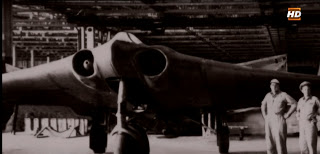
Continuing with my personal ranking of the most innovative aeronautic designers, today we reach number 9 on the list. After my own criterion, this place shall go to the Horten brothers, Walter (1913 – 1998) and Reimar (1915 – 1993) for their development of the first operative flying wings. Along with a lot of gliders, they designed the HO-229, the first flying wing powered by two turbojet engines that was fully operative and was very close to Göring’s dream of a 1000x1000x1000 aircraft (1000 kg of payload, 1000 km range and 1000 km/h). The Horten brothers were also pioneers in stealth coating with the purpose of minimizing the radar footprint.


Therefore, position 9 in my ranking goes to the Horten Bros.

Continuing our thoughts of the last entry, the answer to that open question requires a scientific approach. The big companies we were talking about are profitable and keep a high technologic level due to the fact that the amount of stupid people in an organization, if you consider the organization as a big sample of people, is a non measurable fraction, but still finite of it. Besides, if you take into account the second law by Carlo M. Cipolla (The Fundamental Laws of Human Stupidity) :

The probability that a certain person (will) be stupid is independent of any other characteristic of that person.

Los terremotos y la coalescencia


Continuando con nuestra saga de los mas innovadores diseñadores aeronáuticos de la historia hoy alcanzamos el número 9 de mi ranking particular. Este puesto les corresponde a los hermanos Horten, Walter(1.913-1.998) y Reimar (1.915-1993) por su desarrollo de las primeras "Alas volantes" operativas. Amén de un sinfín de planeadores diseñaron el HO-229, la primera ala volante, dotada con dos turborreactores, realmente operativa y que se aproximaba mucho al sueño del mariscal Göring de un avión 1000x1000x1000 (1000 Kg. de carga a 1000 Km de distancia a 1000 Km/h). Además fueron pioneros en el empleo de recubrimientos "stealh" para disminuir la visibilidad ante el radar.


Vaya pues mi número 9 para los hermanos Horten

Continuando con nuestras reflexiones, la respuesta a la pregunta que dejamos flotando en nuestra última entrada requiere un replanteamiento científico. Estas grandes empresas son rentables y mantienen un nivel tecnológico alto debido a que el número de estúpidos en una gran organización, considerada como una muestra grande de personas, es una fracción no cuantificable, pero finita, de la misma. Además, según la Segunda Ley de Carlo M. Cipolla (Las leyes fundamentales de la estupidez humana)

"La probabilidad de que una persona determinada sea estúpida es independiente de cualquier
otra característica de dicha persona"

Wednesday, April 17, 2013

The Seed and the magic


In memoriam.

We want to express our most severe condemnation to the bomb attacks occured in the Boston Marathon.
Our sincere condolences to the families and the friends of the victims.
We hope that those responsible for these despicable acts are brought to justice.

DIP-team

Today, we will continue where we left it the last time, with our top ten ranking of aeronautic designers in history. As we haven’t had enough feedback yet to make a proper statistic, I will start my own top ten ranking.

Number 10 is for Rostislav Evganievich Alexeyev (1916 – 1980) as the ground effect aircrafts’ creator (aka Ekranoplan). Nowadays you can find a lot of information on the web about them, although until the end of the Soviet Union these aircrafts were a well-kept secret.


These ground effect aircrafts represent an imaginative solution to a specific problem that the soviet military had, transporting large cargos to remote places, too far away from the helicopters’ action radius and in places where a standard aircraft couldn’t land.

Therefore my number 10 in the ranking goes to Alexeyev.

Continuing with my thoughts about the newbie engineers’ lack of contact with the real world, I have to point out that all the knowledge that a fresh graduated student has acquired (that nowadays is, without any doubt, more complete than in our time) is nothing more than an unknown and mysterious seed in a field. To grow they need water and fertilizer, and there is where the magic happens. Depending on the water’s quality and the fertilizer we use, we can obtain melons or strawberries.